Start with the Monaco aquarium, especially if you arrive near opening time. Move next to the permanent collections for Prince Albert I’s expeditions, marine objects, and Monaco’s ocean legacy. Continue through Méditerranée 2050 and Sea Turtle Odyssey, then finish on the rooftop terrace for Mediterranean views.
Quick Information
Plan your visitIs the Oceanographic Museum worth visiting?
The Oceanographic Museum of Monaco is worth visiting if you want one attraction that gives you marine life, history, and Monaco views in the same stop. It feels more layered than a regular aquarium: you move from glowing tanks and shark displays to century-old oceanographic collections, then finish on a rooftop terrace overlooking the Mediterranean.
The museum was built by Prince Albert I to make ocean science visible and exciting for the public, and that purpose still comes through. For visitors, the payoff is the variety: live marine displays for families, heritage galleries for curious travelers, conservation stories for context, and a scenic rooftop finale.
Skip it if you dislike indoor aquariums, tight crowds, or only have under an hour for a quick outdoor stop.
Book Oceanographic Museum tickets →
What’s inside the Oceanographic Museum of Monaco?
The Oceanographic Museum of Monaco is more than a classic aquarium. Inside, the visit moves between live marine displays, historic oceanographic collections, conservation-focused spaces, and a rooftop terrace overlooking Monaco and the Mediterranean.
Monaco aquarium
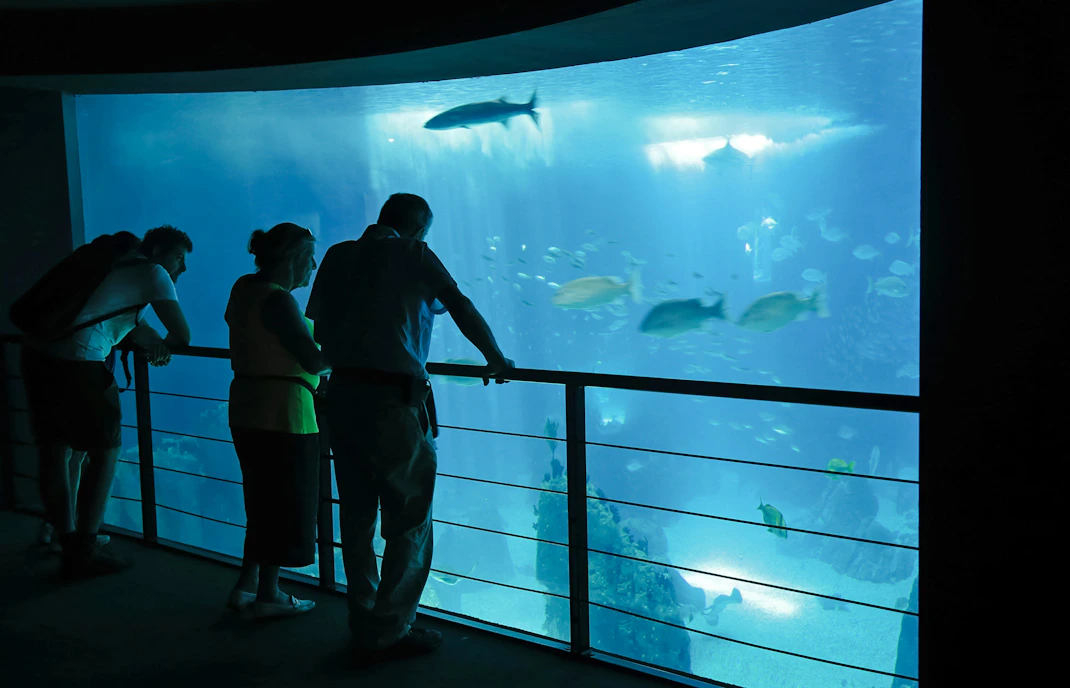
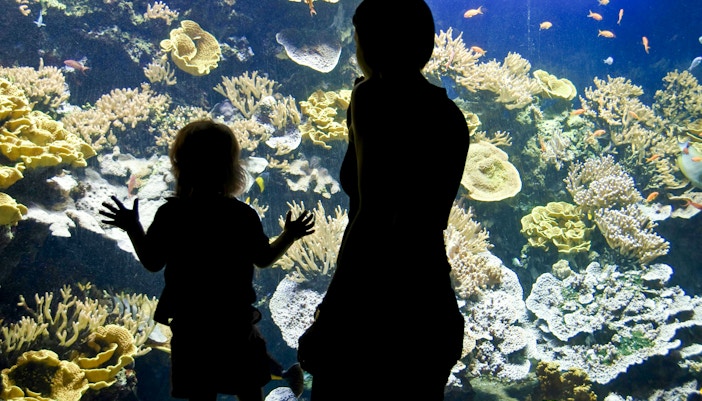
This is the most visual part of the visit, with Mediterranean and tropical tanks featuring reef fish, corals, jellyfish, rays, and sharks. It is the section most visitors head to first, especially families.
Shark Lagoon
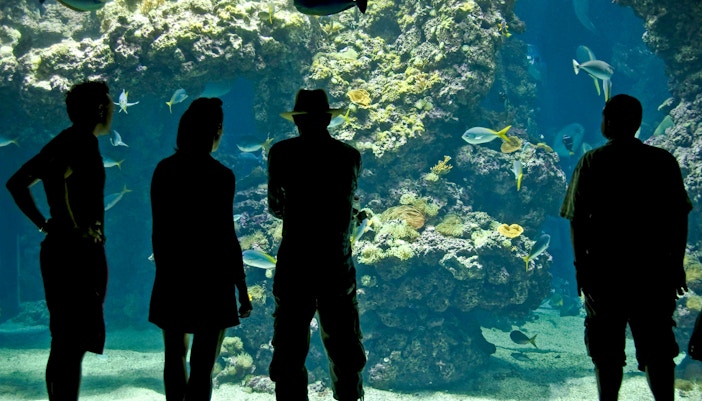
One of the museum’s main aquarium highlights, Shark Lagoon draws attention for its large tank and moving silhouettes of sharks, rays, and reef species. Visit early if you want calmer viewing time.
Permanent collections
The museum’s historic galleries cover Prince Albert I’s expeditions, marine science, model ships, natural history objects, and Monaco’s long connection with ocean research. This is where the visit shifts from aquarium to museum.
Méditerranée 2050
This immersive exhibition looks at the future of the Mediterranean Sea, with themes around climate change, biodiversity, marine protection, and ocean conservation.
Sea Turtle Odyssey
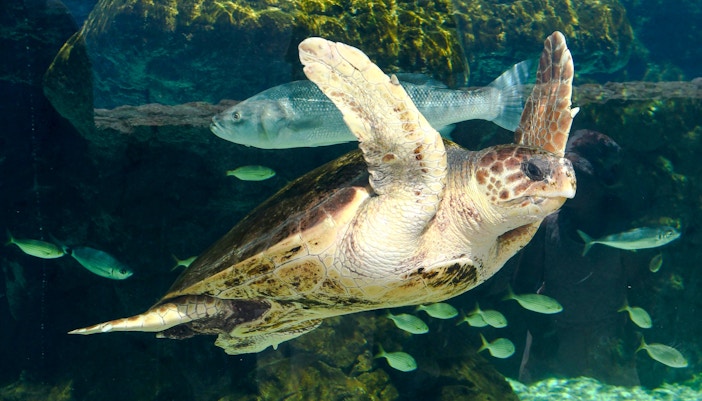
A conservation-focused section that introduces visitors to sea turtle protection and marine habitats. It works especially well for families and anyone interested in the museum’s environmental mission.
Rooftop terrace
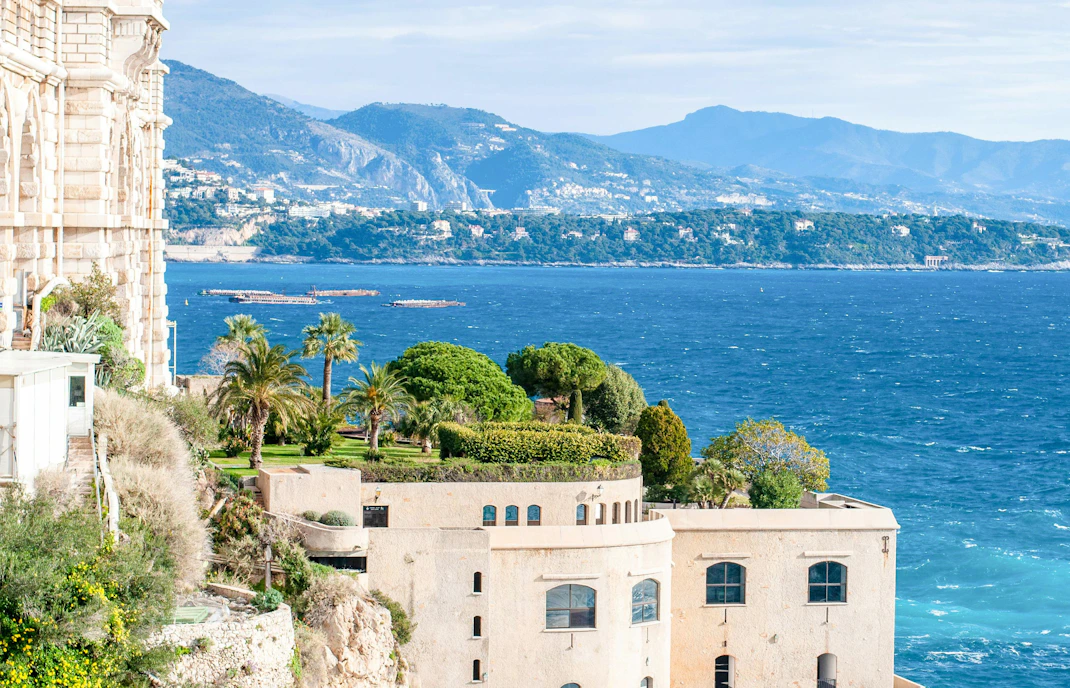
The visit ends best on the rooftop terrace, with open-air views over Monaco, the cliffs, and the Mediterranean. It gives the museum a scenic finale after the darker aquarium galleries.
How to explore the Oceanographic Museum of Monaco
Plan your route
What to prioritize
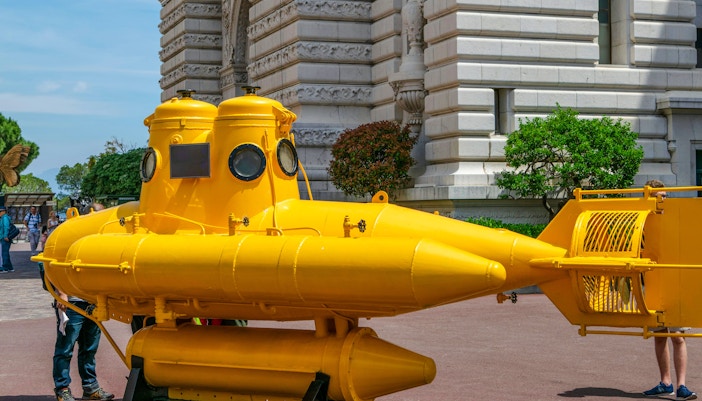
Plan around 2 hours for a comfortable visit. If you are short on time, focus on the Monaco aquarium, Méditerranée 2050, Sea Turtle Odyssey, and rooftop terrace. If you have longer, spend extra time with the permanent collections and Jacques Cousteau-related ocean history.
Brief history of the Oceanographic Museum of Monaco
- 1889: Prince Albert I begins shaping the idea for a public institution dedicated to ocean science and marine exploration.
- 1899: Construction starts on Monaco’s cliff edge, with the building designed into the Rock of Monaco above the Mediterranean.
- 1910: The Oceanographic Museum of Monaco opens to the public as a museum, aquarium, and center for oceanographic education.
- 1957: Jacques-Yves Cousteau becomes director, bringing global visibility to the museum and strengthening its modern marine identity.
- 1988: Cousteau’s directorship ends after more than three decades of influence.
- Today: The museum remains one of Monaco’s most important cultural attractions, combining aquariums, marine collections, conservation exhibits, and rooftop views.
Who built the Oceanographic Museum of Monaco?
The Oceanographic Museum of Monaco was commissioned by Prince Albert I, often called Monaco’s “Navigator Prince.” A dedicated ocean explorer, he wanted marine science to feel public, visible, and inspiring, not locked away in academic circles. Building the museum into Monaco’s cliffside was part of that statement: ocean research deserved the same grandeur as a palace.
Architecture of the Oceanographic Museum of Monaco
Style
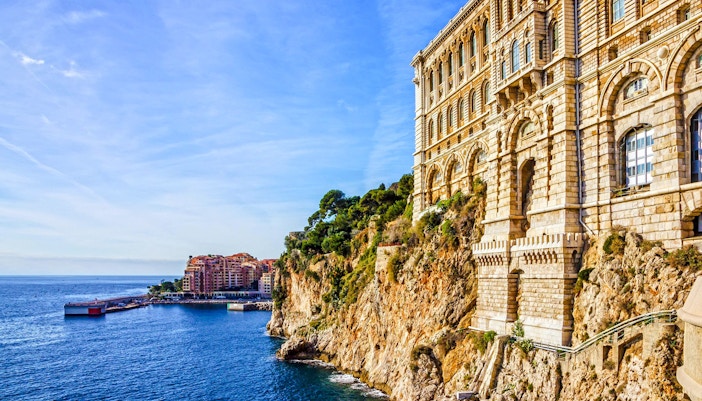
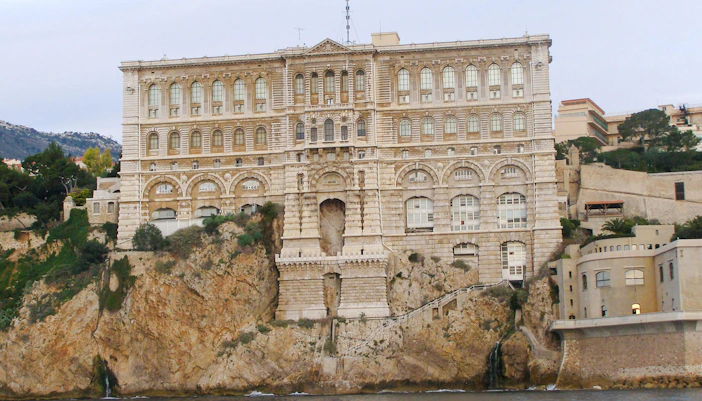
The Oceanographic Museum of Monaco looks more like a cliffside palace than a standard science museum. Its Neo-Baroque-inspired style gives the building a grand, ceremonial feel before visitors even reach the aquarium levels.
- Monumental sea-facing façade
- Decorative stonework and sculptural details
- Designed to make ocean science feel prestigious
Materials
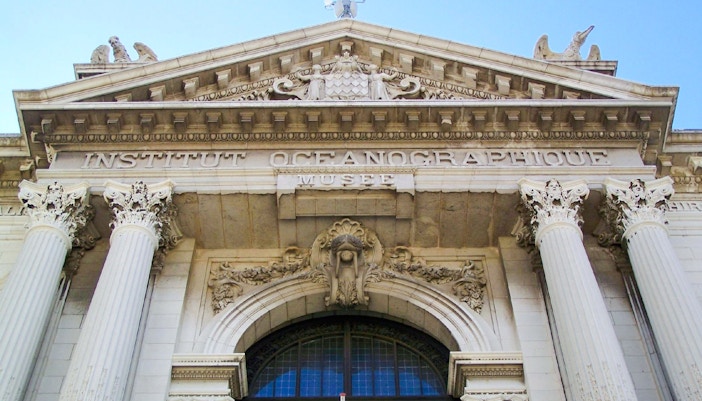
Stone, marble-like interiors, carved details, and formal stairways give the museum its old-world character. The materials make the building feel solid, elegant, and deeply tied to Monaco’s cliffside setting.
- Pale exterior stonework
- Grand interior halls and staircases
- Formal museum atmosphere before the aquarium route begins
Engineering
The museum was built directly into the Rock of Monaco, around 85m above the Mediterranean. That cliffside position is what makes the building so dramatic, but it also made the construction unusually ambitious.
- Anchored into the cliffside
- Built above the Mediterranean Sea
- Designed to connect the museum visually with the ocean
Visitor experience
The architecture shapes the visit like a journey. You move from bright entrance spaces into darker aquarium galleries, then back toward open light on the rooftop terrace.
- Palace-like arrival spaces
- Darker aquarium rooms below
- Rooftop terrace as the scenic finale
Architect
French architect Paul Delefortrie designed the original building for Prince Albert I. The goal was not to create a modest research space, but a landmark that made oceanography visible, public, and impressive.
- Designed for Prince Albert I
- Built as a public home for ocean science
- One of Monaco’s most recognizable cliffside landmarks
The Oceanographic Museum’s conservation mission today
The Oceanographic Museum of Monaco is not just a historic building with aquarium tanks. It still carries Monaco’s wider ocean mission through marine education, conservation-led exhibitions, coral displays, and family-friendly learning spaces.
That is what makes the visit feel more meaningful. You may arrive for sharks, rooftop views, or the museum’s cliffside architecture, but the route gradually connects those highlights to bigger questions about marine protection. By the end, the museum feels less like a passive sightseeing stop and more like a reminder of why the Mediterranean needs active care.
Frequently Asked Questions About the Oceanographic Museum of Monaco
The museum is worth visiting if you want marine life, ocean history, conservation exhibits, and rooftop views in one stop. It feels more layered than a standard aquarium.
Yes, the Monaco aquarium is inside the museum, along with permanent collections, Méditerranée 2050, Sea Turtle Odyssey, and the rooftop terrace.
Standard tickets include access to the aquarium areas, permanent collections, Méditerranée 2050, Sea Turtle Odyssey, and rooftop terrace. Special paid activities are not included unless stated.
Most visitors spend around 2 hours inside. Add more time if you want to read the historic displays slowly or pause on the rooftop terrace.
Prioritize the Monaco aquarium, Shark Lagoon, Méditerranée 2050, Sea Turtle Odyssey, permanent collections, and rooftop terrace for the strongest mix of marine life, history, and views.
Visit near opening time for calmer aquarium galleries. Late afternoon can also work well, while weekends, school holidays, and rainy days are usually busier.
Advance booking is recommended in summer, on weekends, and during school holidays. Online tickets help you avoid buying tickets at the counter, but validation and internal crowds still apply.
Prince Albert I of Monaco founded it to make ocean science public, visible, and inspiring through a museum, aquarium, and research-led institution.
Yes, Jacques-Yves Cousteau directed the museum from 1957 to 1988 and helped shape its reputation in marine education and ocean exploration.
.svg?auto=compress%2Cformat&w=156&h=48&q=90&crop=faces&fit=crop)